Valentine’s Day unfolds as a multisensory tapestry woven with threads of deep crimson roses, the ink of handwritten sentiments, the clink of crystal stemware, and the rich, enveloping aromas of dark chocolate and candlelit dinners. It is a holiday culturally coded for adult romance, a ritual of intimate connection celebrated through symbols and experiences often inaccessible to the young heart. A child observes this pageant of affection from the periphery, clutching paper valentines for classmates, perhaps enjoying a heart-shaped cookie, yet sensing a separation—a grown-up world of toasting and tasting from which they are gently excluded. Where, in this landscape of love, is their invitation to the feast? Where is the ceremonial drink that speaks their language of joy, wonder, and unbridled delight?
The answer arrives not in a chalice, but in a clear glass, crowned with a cloud and crackling with magic: Cupid’s Cocktail. This is far more than a mere “kid-friendly drink.” It is a potent, symbolic gesture of inclusion. It is a lesson in culinary alchemy disguised as play. It is a vibrant, effervescent artifact that translates the abstract emotions of Valentine’s Day into a tangible, sensory experience a child can not only hold but help create. This 2000-word exploration delves beyond the simple recipe into the philosophy, science, and profound emotional resonance of crafting this modern treat—a testament to the idea that the most potent celebrations are those that bridge generations through shared wonder.
Chapter I: The Philosophy of the “Mocktail”—Elevating the Child’s Experience
In an era where children’s menus are often an afterthought of chicken nuggets and sugary sodas, the conscious creation of a non-alcoholic “cocktail” represents a quiet revolution. It is an act of respect. By bestowing upon a child’s drink the same care, presentation, and thematic consideration as an adult’s craft cocktail, we communicate a powerful message: Your presence here is valued. Your palate is worthy of attention. Your joy is integral to this celebration.
Cupid’s Cocktail operates on this higher plane. It rejects the notion that a child’s drink must be simplistic or an afterthought. Instead, it embraces complexity in experience, prioritizing:
-
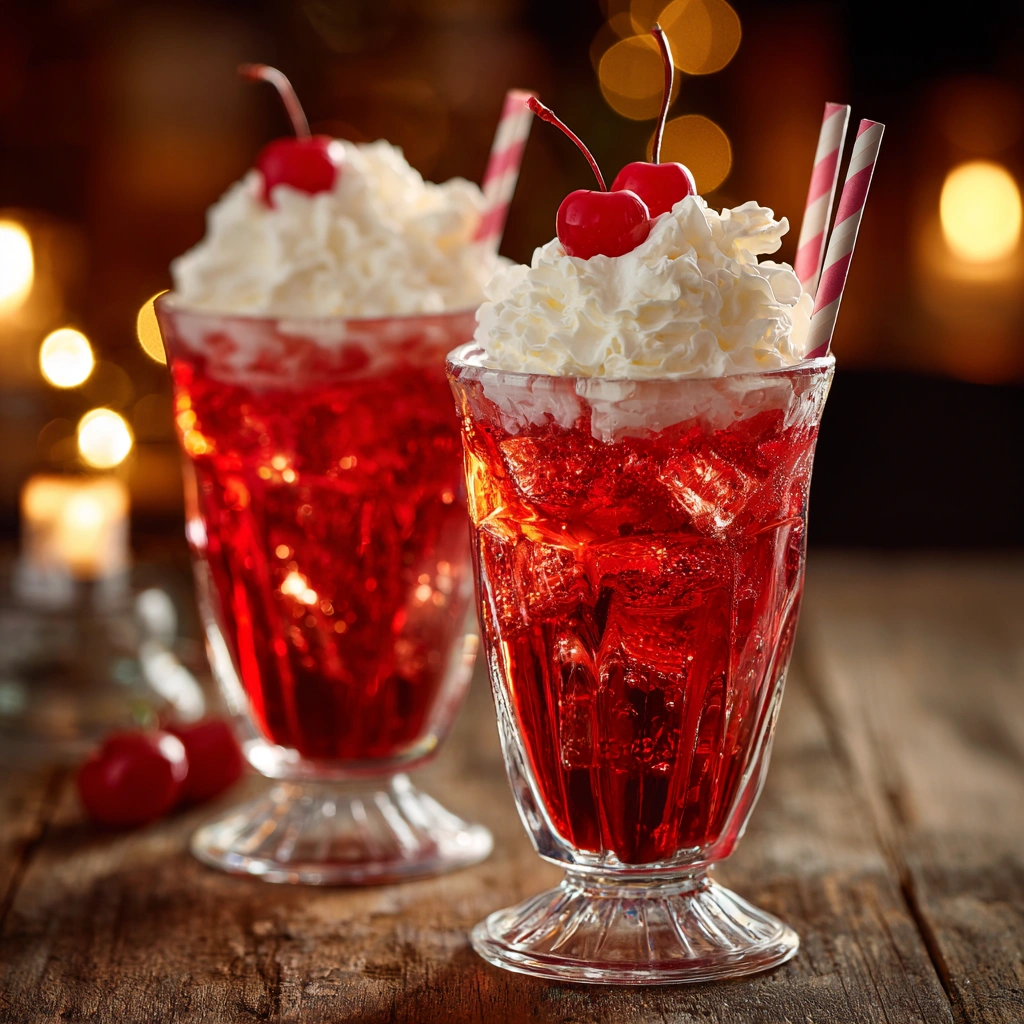
Narrative: The drink tells a story, from Cupid’s arrow (the grenadine) piercing the sky (the soda) to create a sunset (the ombré), over which a fluffy cloud (whipped cream) drifts, sprinkling sparkling magic (Pop Rocks) upon the world below.
-
Agency: The child is often not a passive recipient but a co-conspirator in the drink’s creation, empowered to pour or sprinkle, thus investing in the outcome.
-
Sensory Engagement: It targets all five senses with intentionality, making consumption an event, not just a refreshment.
This philosophical foundation transforms the kitchen counter into a laboratory of love, where the real ingredient being measured is connection.
Chapter II: Deconstructing the Enchantment—A Sensory Analysis of Each Component
The genius of Cupid’s Cocktail lies in its meticulous layering of effects. Each ingredient is a character in a play, contributing a crucial role to the final performance.
1. The Stage & The Atmosphere: The Clear Glass and The Chilled Soda
The choice of a clear, tall glass is the first masterstroke. Transparency is non-negotiable, for the visual symphony is half the delight. It functions as a proscenium arch, framing the coming drama. The base liquid—Sprite, 7UP, or Ginger Ale—is more than a sweet, fizzy vehicle. It is the elemental atmosphere of the drink.
-
Sprite/7UP: Provides a clean, bright, and neutral canvas of lemon-lime sparkle. Its clarity is essential for the grenadine’s performance, and its ubiquitous sweetness is a universally accepted childhood joy.
-
Ginger Ale: Introduces a sophisticated alternative. Its subtle, warming spice and golden hue add a layer of complexity, creating a more autumnal, rich palette for the red grenadine to contrast against. The “bite” of ginger can be a delightful surprise for adventurous young palates.
The imperative to have the soda intensely chilled is a lesson in food science: cold liquids hold carbonation more effectively, ensuring the foundational fizz survives the construction process.
2. Cupid’s Arrow: Grenadine Syrup and the Theater of Fluid Dynamics
Grenadine is the star actor, and its performance is a beautiful lesson in physics. Originally a pomegranate syrup, its modern iteration is often a blend of fruit juices sweetened to a viscous consistency. This viscosity and density are key to its magic.
When poured slowly (ideally over the back of a spoon to disperse the impact), the dense syrup sinks through the less-dense soda due to gravity. This creates the initial dramatic “bleed”—a crimson streamer descending to the bottom. Then, a slower, second act begins: diffusion. The syrup begins to dissolve and mingle with the soda, creating swirling, ethereal tendrils that rise in a pink haze. This stunning ombré gradient—from clear gold at the top to deep ruby at the bottom—is a dynamic, living piece of art. It visually encapsulates the theme: love (the red) changing and brightening everything it touches (creating pink). It is slow, beautiful, and mesmerizing, teaching patience and observation.
3. The Dreamscape: Whipped Cream as Textural Contrast
The whipped cream topping serves multiple functions. Visually, it is the cumulus cloud floating serenely above the pink-and-red sunset, completing the skyward tableau. Gastronomically, it introduces a vital textural contrast. The experience is no longer one-dimensional. The sharp, clean, effervescent bite of the soda meets the rich, soft, melting unctuousness of the cream. This contrast elevates the drink from a soda to a dessert experience. Furthermore, it provides a stable, adhesive platform for the final, most magical elements.
4. The Jewels and the Spark: Maraschino Cherries and Pop Rocks as Iconic Garnish
The maraschino cherry is a relic of soda fountain history, a symbol of special treats and indulgence. Its unnaturally vibrant, glossy red is the perfect punctuation mark of color. It is the “heart” resting on the cloud, a sweet, syrupy prize to be savored at the drink’s conclusion.
But the true piece de résistance is the Pop Rocks. This is not merely a garnish; it is an auditory and tactile special effect. The science behind Pop Rocks is captivating: sugar syrup is super-saturated with carbon dioxide under high pressure, then cooled and shattered into tiny, fragile pieces. When placed on the moist whipped cream and then introduced to the saliva in the mouth, the candy’s fragile walls shatter, releasing the trapped CO₂ with a satisfying crackle and pop.
This transforms the act of drinking. It is no longer passive consumption but an interactive exploration. The child becomes an active participant in a scientific phenomenon, their mouth the theater for a tiny, safe, explosive joy. The crackling sound is private laughter shared between the drink and the drinker. It embodies the fizzy, excited, unpredictable feeling of happiness itself.
Chapter III: The Ceremonial Preparation—A Ritual of Shared Attention
The preparation of Cupid’s Cocktail should be approached not as a chore, but as a sacred, five-minute ritual. The steps are simple, but the intention behind them is everything.
Step 1: The Consecration of the Vessel. Begin with the chilled, clear glass. If using ice, discuss its purpose: to keep the magic cold and crisp. This is preparation, the setting of the stage.
Step 2: The Pouring of the Sky. As you pour the soda, point out the furious rush of bubbles. Explain they are like millions of tiny celebrations rushing to the surface. Leaving space at the top is an act of anticipation—creating room for wonder.
Step 3: The Casting of the Spell (The Grenadine Pour). This is the heart of the ritual. Hand the spoon to your child. Steady their small hand as they slowly pour the thick, red syrup. Watch together, in hushed anticipation, as the laws of physics paint a masterpiece before your eyes. Narrate the story: “Watch Cupid’s arrow sink down… and now see the love spreading up, coloring everything with happiness.”
Step 4: The Layering of the Cloud. Applying the whipped cream should be generous and fun. Let them spray the can (with supervision) or dollop a fluffy mound. It’s the comforting, soft blanket over the dazzling sky.
Step 5: The Bestowal of Magic. Finally, the grand reveal. Present the Pop Rocks like a wizard’s secret ingredient. Let them sprinkle the crystals over the white cloud, where they glitter like enchanted dust. Place the cherries with ceremony. This is the moment of empowerment—they have helped craft the enchantment.
Step 6: The Immediate Consumption. The drink is an ephemeral artwork. The Pop Rocks are alive. Hand them the glass with a straw and instruct them to take a deep sip from the bottom, up through the cloud. The resulting symphony of cold fizz, sweet cream, and explosive popping is the grand finale of their creative act.
Chapter IV: The Science of Smiles—Educational Layers Beneath the Fun
Unbeknownst to the delighted child, Cupid’s Cocktail is a stealthy teacher. Within its sweet confines lie lessons in:
-
Fluid Density & Diffusion: The grenadine demonstration is a perfect, edible example of how liquids of different densities interact and eventually mix.
-
States of Matter & Gas Release: The Pop Rocks are a thrilling introduction to how gases can be trapped in solids and released upon change in condition (moisture).
-
Emulsion & Texture: The combination of liquid soda and fatty whipped cream demonstrates how different textures create complex mouthfeel, a fundamental concept in gastronomy.
-
Color Theory: The visual creation of an ombré from red to pink is a practical lesson in how colors blend and create new hues.
Chapter V: Adaptations and Expansions—A Template for Infinite Celebration
The core formula of Cupid’s Cocktail is a versatile template for any occasion, demonstrating its foundational strength.
-
The “Berry” Enchanted Version: For a natural twist, substitute grenadine with a homemade puree of strained, sweetened strawberries or raspberries. The seeds and pulp will create a different, more organic visual effect.
-
The Dairy-Free Cloud: Coconut whipped cream or aquafaba-based vegan cream provides an inclusive alternative without sacrificing the essential cloud texture.
-
The Herbal Elegance Variation: For a more refined flavor profile, steep a spring of rosemary in simple syrup. Once cooled, this rosemary syrup can replace grenadine. The herbal, piney notes against the lemon-lime soda are unexpectedly sophisticated and delicious, offering a conversation about savory-sweet combinations.
-
Thematic Transformations: Use blue curaçao syrup for a “Mermaid Lagoon.” Use green syrup and candy worms for a “Swamp Creature” Halloween drink. The template of clear soda + dense syrup + cream + crunchy topping is endlessly adaptable.
Epilogue: The Lasting Elixir—Memory Beyond the Last Pop
When the final cherry is eaten, the last pop fizzles into silence, and the glass sits empty, what remains? Not just a sugar rush, but a memory imprint. The memory of a parent’s focused attention. The memory of being entrusted with a “grown-up” ritual. The memory of shared awe at a swirling color change and mutual giggles at a crackling tongue.
Cupid’s Cocktail, in its radiant simplicity, achieves something profound: it democratizes the romance of Valentine’s Day. It declares that love is not only the quiet intimacy between adults but also the loud, joyful, sparkling connection between a caregiver and a child. It proves that ceremony and magic are not dependent on alcohol or expense, but on creativity, presence, and the willingness to see the world through a lens of wonder.
So this February 14th, amidst the flowers and the fine china, carve out five minutes for this different kind of alchemy. Gather your simple ingredients. Call your small valentine to the counter. Together, create not just a drink, but a shared story—a story that says, in every bubble, every swirl of pink, and every crackling pop, “You are loved. Your joy is my celebration. Let’s make some magic.” For in the end, the true elixir is not in the glass, but in the shared moment of its creation.