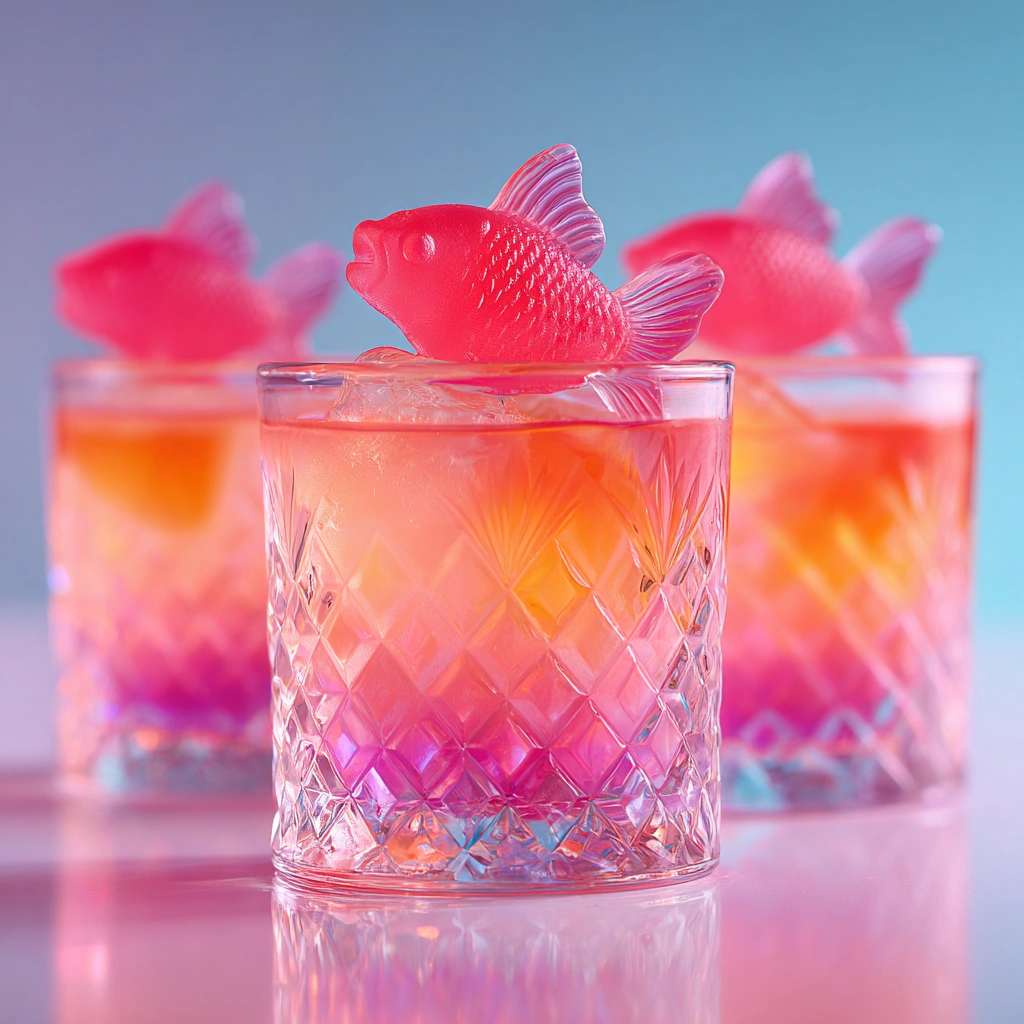
While the exact origin of the Swedish Fish Shot is murky (like many popular shooters), it emerged from American bar culture in the late 20th/early 21st century, riding the wave of candy-flavored spirits and the trend of “fun” shots. It represents a fascinating intersection of confectionery and alcohol.
The Muse: The Swedish Fish Candy
The candy itself has a richer history than the shot. Originally created by Swedish confectioner Malaco in the 1950s for the North American market, the fish-shaped, red, chewy treat was a nod to Sweden’s history of fishing and the pastime of consuming salmiakki (salty licorice) shaped like fish. The North American version famously omitted the salty licorice flavor in favor of a unique mixed-berry profile, which became a sensation. The shot is a direct homage to this specific, globally recognized flavor, not to traditional Swedish alcohol.
The Rise of the “Fun Shot” Culture
The Swedish Fish Shot belongs to a category of drinks designed for immediate enjoyment and social bonding rather than contemplative sipping. It thrived in college bars, at pregames, and in party scenes where shareable, low-cost, high-flavor experiences were king. Its popularity was further cemented by the internet, with recipes spreading across forums and social media, solidifying its status as a must-know party trick.
Preparation Phase & Tools to Use: Building Your Foundation
While mixing this shot is simple, a thoughtful approach with the right tools elevates it from a haphazard mix to a consistently perfect pour.
Essential Tools and Their Roles:
-
Jigger or Measuring Shot Glass: This is non-negotiable. Precision is the soul of balance in any cocktail, especially one with only three components. A ½ oz overpour of vodka can tilt the shot from sweet to harsh. A double-ended jigger (featuring ½ oz and ¾ oz or 1 oz cups) is the bartender’s secret for speed and accuracy.
-
High-Quality Cocktail Shaker (Boston or Cobbler): A shaker does more than just mix. The rapid agitation with ice accomplishes three critical things: 1) Chilling: It brings the drink down to a near-freezing temperature, suppressing harsh alcohol notes. 2) Dilution: It adds a small, controlled amount of water, which is essential for “opening up” the flavors and creating a smoother mouthfeel. 3) Aeration: It introduces tiny bubbles, giving the shot a slightly lighter, more integrated texture than stirring.
-
Hawthorne Strainer: If using a Boston shaker (tin-on-tin or tin-on-glass), this spring-loaded strainer fits perfectly to hold back the ice while letting the liquid flow smoothly into your glass.
-
Chilled Shot Glasses: Presentation matters. Storing your shot glasses in the freezer for 15-20 minutes before serving adds a professional touch. The frosty glass keeps the shot colder longer and provides a satisfying tactile experience.
-
Premium, Fresh Ice: Use fresh, hard, clear ice from a freezer with no off-odors. Old, cloudy, or freezer-burned ice can impart unwanted flavors. The ice should be cold enough to create a strong “crack” when the shaker is first tapped.
Advanced Preparation Tips for the Connoisseur
-
The Chill Chain: Think like a chef about “mise en place.” Keep your vodka and cranberry juice refrigerated. If possible, chill your bottle of schnapps as well. Starting with cold ingredients means less dilution is needed from shaking to achieve the perfect temperature.
-
The Order of Operations: Always add your ingredients to the shaker before the ice. This allows for a quick taste-check (the “bar spoon taste”) if needed and prevents splashing. Then, add a generous scoop of ice—the shaker should be about 2/3 full.
-
The Shaking Technique: It’s not just about up-and-down. A confident, rhythmic shaking that moves the ice throughout the entire volume of liquid is key. Aim for a tight, horizontal shake (not a frantic vertical one) for about 12-15 seconds. You should see a fine layer of frost form on the outside of the metal tin.
-
The Strain: Pour out with confidence in one smooth motion. A slow, hesitant pour leads to dripping and inconsistent distribution if making multiple shots.
Ingredients Deconstructed: The Holy Trinity of Flavor
Understanding each component is the key to mastering and even innovating on the classic recipe.
-
½ oz 100 Proof Blackberry Schnapps: This is the star and the soul of the shot.
-
Why 100 Proof? At 50% alcohol by volume, it provides a robust flavor base and the necessary alcoholic “backbone” without needing an excessive volume of liquid. Lower-proof schnapps (often 30-42 proof) are more watery and syrupy-sweet. The 100-proof version has a more concentrated, true fruit flavor and a cleaner alcohol heat that integrates beautifully.
-
Flavor Profile: It delivers the primary “berry bomb” that mimics the candy. Blackberry schnapps typically has notes of dark, jammy berries with a hint of tartness, which is the closest commercial flavor to the candy’s proprietary blend.
-
-
½ oz Vodka: This is the supporting strength.
-
Function: Vodka is primarily neutral ethanol and water. Its job here is to boost the overall alcohol content (ABV) of the shot without adding competing flavors. It “stretches” the schnapps flavor while ensuring the shot has a satisfying potency.
-
Choice Matters: A mid-shelf, charcoal-filtered vodka (like Tito’s, Absolut, or Ketel One) is ideal. It’s clean and smooth. Using a bottom-shelf vodka can introduce unwanted grainy or chemical notes that the sweet flavors can’t fully mask.
-
-
½ oz Cranberry Juice: This is the balancing act.
-
Tartness & Acidity: Pure cranberry juice (or a cranberry cocktail blend) provides a crucial counterpoint to the intense sweetness of the schnapps. This tartness elevates the berry flavor, preventing it from tasting flat or cloying.
-
Color Agent: It gives the shot its signature translucent, ruby-red color, cementing the visual connection to the red Swedish Fish.
-
Texture: It adds a slight body and fruit-juice viscosity.
-
The Step-by-Step Protocol: Crafting the Perfect Shot
Follow this detailed method for laboratory-grade consistency and quality.
Step 1: The Mise en Place
Gather your chilled ingredients and tools. Place your frozen shot glasses on the counter. Into the smaller tin of your Boston shaker (or the bottom of your Cobbler shaker), use your jigger to add, in this order: ½ oz 100 Proof Blackberry Schnapps, ½ oz Vodka, ½ oz Cranberry Juice. This order allows you to see each level clearly, acting as a visual double-check of your measurements.
Step 2: The Dynamic Chill
Fill the shaker 2/3 full with fresh, hard ice cubes. Immediately seal the shaker tightly. For a Boston shaker, give the junction a firm tap with the heel of your hand to create a proper seal. Hold the shaker with both hands—one on the tin, one on the glass—and shake with a firm, horizontal, and rhythmic motion. Channel the energy through your shoulders, not just your wrists. Count to 15 seconds. The shaker should feel painfully cold in your hands.
Step 3: The Confident Serve
Unseal the shaker. Place your Hawthorne strainer over the top of the tin. In one fluid motion, strain the brilliantly red liquid into your awaiting frozen shot glass. A small, foamy head is perfect. Serve immediately with a smile.
Notes, Variations, and Expert-Level Customizations
The classic recipe is beloved for a reason, but the creative bartender can use it as a springboard.
-
The “100 Proof” Imperative: This cannot be overstated. Using a low-proof schnapps will result in a watery, overly sweet shot that lacks structure. If you must use it, consider reducing the cranberry juice to ¼ oz to concentrate the flavor.
-
Batch Philosophy: To make a party-sized batch, the formula scales linearly. For 10 shots: 5 oz Schnapps, 5 oz Vodka, 5 oz Cranberry Juice. Mix in a large pitcher or beverage dispenser. Do not add ice to the batch vessel. Instead, keep it chilled and shake individual servings with ice, or serve over a large ice block in a punch bowl to minimize dilution.
-
The Mocktail Transformation: Create a sophisticated “Swedish Fish Elixir” for non-drinkers. Combine 1 oz high-quality blackberry syrup (like Monin) or a reduced blackberry puree with 1 oz cranberry juice and ½ oz fresh lemon juice. Shake vigorously with ice and strain into a coupe glass. Top with 1 oz of club soda for effervescence. Garnish with a skewered fresh blackberry.
-
Garnish Gallery: While traditionally served ungarnished, a garnish can enhance the experience.
-
The Classic Candy: Drape a red Swedish Fish candy over the rim of the shot glass.
-
The Fresh Touch: A single, plump fresh cranberry dropped into the bottom of the glass before pouring.
-
The Citrus Zest: A tiny twist of lemon or lime peel expressed over the shot adds a bright, aromatic top note that complements the berries beautifully.
-
-
Spirit Swaps & Twists:
-
Vanilla Vodka: Replaces standard vodka. The vanilla note accentuates the candy-like quality, mimicking the creamy undertones some perceive in the actual candy.
-
Citrus Vodka: Adds a bright, lemony edge that plays well with the tart cranberry.
-
Raspberry Liqueur (Chambord): For a luxury version, replace half the schnapps with a dash of Chambord. It adds incredible depth and real fruit complexity.
-
A Hint of Citrus: A tiny drop (1/8 tsp) of fresh lemon juice can sharpen all the flavors if your cranberry juice is particularly sweet.
-
Critical Mistakes to Avoid: A Troubleshooting Guide
Even the simplest recipes have pitfalls. Avoid these common errors to guarantee shot perfection.
-
The Eyeball Estimation: This is the number one cause of a failed shot. Without equal parts, the delicate balance is destroyed. Always use a jigger.
-
The “Stirring is Fine” Fallacy: Stirring with ice in a mixing glass will not achieve the same level of integration, chill, or texture. The vigorous shake is a functional necessity.
-
Using Warm Ingredients or a Warm Glass: A tepid shot tastes overwhelmingly alcoholic and syrupy. The cold temperature is a primary flavor mask and enhancer.
-
Over-Shaking or Under-Shaking: Under-shaking (less than 10 seconds) results in a warm, poorly mixed shot. Over-shaking (beyond 20 seconds) over-dilutes it, making it taste weak and watery. 12-15 seconds is the sweet spot.
-
Low-Qredient Inputs: Compromising on a harsh vodka or an artificially flavored, low-proof schnapps will yield a shot that tastes cheap and chemical-laden. Quality in, quality out.
-
The Pre-Batched Ice Bath: Making a large batch and leaving it in a pitcher full of ice for hours leads to catastrophic dilution. Batch the base liquid, but chill and dilute individual servings to order.
The Social Ecosystem: What to Serve With Swedish Fish Shots
These shots are social catalysts, and their accompaniments should enhance the festive, playful mood.
Liquid Companions (The Shot Flight):
Create a “Candy Store” flight. Serve alongside:
-
Sour Patch Kid Shot: Citrus vodka, lime juice, and a splash of simple syrup, rimmed with sour sugar.
-
Buttery Nipple: Butterscotch schnapps layered with Irish cream liqueur.
-
Cake Shot: Vanilla vodka with a lemon rim and dusting of powdered sugar.
The variety plays with different sweet profiles and makes for an interactive tasting experience.
Culinary Counterpoints:
The goal is to balance sweetness with fat, salt, and crunch.
-
Savory & Salty: Mini bacon-wrapped dates, pretzel rods, salted nuts, or a sharp cheddar cheese board.
-
Creamy & Cool: Mini cucumber sandwiches, a dollop of buffalo chicken dip on a chip, or chilled shrimp cocktail. The fat and protein help slow alcohol absorption.
-
Fruity & Fresh: A large platter of pineapple chunks, strawberries, and watermelon. The natural sugars and hydration are perfect complements.
-
The Ultimate Party Pairing: A build-your own slider station with beef patties, cheese, and pickles. The savory, umami-rich burgers are the ideal foil to the sweet, fruity shots.
The Science of “Dangerously Easy”: Why Can’t You Taste the Alcohol?
The shot’s infamous drinkability is a result of specific psychophysical and physiological factors:
-
Flavor Masking: The intense sweetness from the schnapps and the tartness from the cranberry juice overwhelm the taste buds, particularly those sensitive to bitterness and the burning sensation of ethanol (mediated by the TRPV1 receptor). Sweetness is a powerful neurological signal that can suppress other tastes.
-
Cold Suppression: Ethanol’s burning sensation is significantly muted at low temperatures. By serving the shot ice-cold from a shaker, the physical “heat” of the alcohol is minimized.
-
Expectation Bias: The brain, primed by the name “Swedish Fish,” expects a candy flavor. This top-down processing influences perception, causing you to focus on the expected sweet/berry notes and downplay the alcohol cues.
-
Rapid Consumption: Shots are designed to be consumed quickly, bypassing much of the nuanced olfactory evaluation that happens during slow sipping. The alcohol hits the system before the brain has fully processed its presence in the flavor.
This is the core of the “danger.” Because the defensive sensory warnings (bitterness, burn) are masked, individuals may consume more volume, more quickly, than they would with a drink that tastes explicitly “strong.” The ethanol enters the bloodstream just as efficiently, leading to rapid intoxication. This is why responsible consumption—pacing, hydration, and eating—is paramount when enjoying such palatable cocktails.
Frequently Asked Questions: The Expert’s Clarifications
1. Can I make this a full-sized cocktail instead of a shot?
Yes, absolutely. It makes a delightful martini-style drink. Use 1.5 oz 100-proof schnapps, 1.5 oz vodka, and 1.5 oz cranberry juice. Shake and strain into a chilled coupe or martini glass. Garnish with a lemon twist.
2. Is there a specific brand of 100-proof blackberry schnapps you recommend?
DeKuyper’s “Peachtree” Schnapps line includes a reliable 100-proof blackberry. Arrow and Mr. Boston also produce versions. Availability varies by region, so check your local liquor store.
3. I’m sensitive to sweetness. How can I adjust the shot?
Reduce the schnapps to ½ oz and increase the vodka to ¾ oz. You can also use 100% pure, unsweetened cranberry juice (like Ocean Spray Pure) instead of a cranberry cocktail blend, which will add significant tartness to cut the sweetness.
4. Can I prepare these shots hours ahead for a party?
You can pre-mix the liquid base (schnapps, vodka, juice) in a sealed bottle and refrigerate it. Do not add ice. When guests arrive, shake individual servings with fresh ice to chill and dilute properly. Pre-diluting and storing leads to a flat, watery drink.
5. What’s the actual alcohol content (ABV) of one shot?
Given the equal parts of 100-proof (50% ABV) schnapps, 80-proof (40% ABV) vodka, and 0% ABV juice, the combined ABV of the liquid is approximately 30% ABV (60 proof). This is still stronger than a typical glass of wine (12-15% ABV) and most beers (4-6% ABV).
Conclusion: More Than Just a Sweet Sip
The Swedish Fish Shot is a cultural artifact of modern social drinking. It represents playfulness, accessibility, and the shared joy of flavor nostalgia. Mastering it is about respecting its simplicity—understanding that the precision of the measure, the vigor of the shake, and the quality of the chill are what transform three basic ingredients into a legendary party staple. It’s a reminder that cocktails, at their heart, are about connection and enjoyment. So, gather your friends, mix a round with care, raise those glittering red glasses, and toast to the sweet things in life. Just remember, as with all good things, the key is savoring the moment—responsibly, and perhaps with a glass of water on the side.